

Pico Laser vs CO2 Laser: A Guide to Choosing the Right Laser Treatment

Updated: 5 days ago

Medically reviewed by Dr Ray Loh Hong Yuh and Dr Sy Li Lin, MOH-certified doctors at Fundamental Aesthetic Medical Clinic. Last reviewed: 20 Oct 2026
Pico laser and CO2 laser are the two most commonly discussed laser treatments in Singapore, and patients routinely arrive at consultation having read about both without a clear sense of which applies to them.
The confusion is understandable. Both are lasers. Both are used on the face. Both are described as treating "skin concerns." But they work on fundamentally different principles, and they are not substitutes for one another.
The short version: pico laser targets pigment. CO2 laser resurfaces texture. If your main concern is a flat brown mark, those two treatments are not interchangeable options — one is correct and one is not.
This guide explains how each works, what each is actually for, where they overlap, and how a doctor decides between them.
Introduction to Laser Treatment

All aesthetic lasers work by delivering light energy that a specific target in the skin absorbs. What separates one laser from another is what it targets and how the energy is delivered.
Two variables matter most:
Wavelength determines what absorbs the energy — melanin, water in the tissue, or haemoglobin in blood vessels.
Pulse duration determines whether the effect is primarily mechanical or primarily thermal.
Pico laser and CO2 laser sit at opposite ends of both. That is the whole difference, and everything below follows from it.
What is Pico Laser Treatment?

Pico laser is a picosecond laser — it delivers energy in pulses measured in trillionths of a second.
That speed is the point. Because the pulse is so brief, the energy acts on pigment as a rapid mechanical shockwave rather than as sustained heat. Pigment particles are shattered into fragments small enough for the body's immune system to clear over the following weeks.
The practical consequence: pico laser breaks down pigment without significantly heating the surrounding tissue. The skin surface stays largely intact, which is why downtime is short and why the treatment is widely used on Asian skin, where heat-driven treatments carry a higher risk of post-inflammatory hyperpigmentation.
Picosecond lasers have been studied specifically in Asian skin types — a meta-analysis and systematic review of picosecond laser for pigmentary disorders in Asian patients covers the evidence base.
Pico Laser Benefits

Targets pigmentation — sun spots, freckles, age spots, and some forms of melasma
Minimal surface disruption, so downtime is typically short
Lower thermal load, which matters for darker and more reactive skin types
Also used for tattoo removal, where the same shattering mechanism applies to ink
Can improve overall tone and clarity across a treated area
What Pico Laser Does Not Do
Pico laser is not a resurfacing treatment. It will not meaningfully change deep textural problems — pitted acne scarring, significant skin laxity, or depressed scars — because it is not designed to remodel the skin's structure. Expecting it to resolve deep scarring is the most common mismatch we see.
What is CO2 Laser Treatment?

CO2 laser is an ablative resurfacing laser. Its wavelength is absorbed by water, which is present throughout skin tissue.
Rather than targeting a pigment particle, it removes microscopic columns of tissue and delivers controlled thermal injury to the surrounding skin. The body then repairs those columns, and that repair process produces new collagen and remodelled tissue.
Most CO2 treatment now uses a fractional delivery pattern: the laser treats a fraction of the surface in a grid of microscopic zones, leaving untreated skin in between. That untreated skin speeds healing considerably compared with the fully ablative resurfacing used decades ago.
This is why "fractional laser" and "fractional CO2" refer to the delivery pattern, not a different machine. Patients comparing "pico vs fractional laser" are usually comparing pico against fractional CO2.
CO2 Laser Benefits
Addresses texture — acne scarring, surgical and traumatic scars, enlarged pores
Stimulates collagen remodelling over the months after treatment
Treats fine lines and crepey texture through resurfacing
Removes certain raised lesions and skin growths
Works on structural change rather than surface discolouration
What CO2 Laser Costs You in Recovery
CO2 is the more aggressive treatment. Expect genuine downtime — redness, swelling, oozing in the first days, then flaking as the skin repairs. That recovery is not a side effect of the treatment; it is the treatment. Collagen remodelling is driven by the healing response.
Fractional CO2 Laser vs Pico Laser: Key Differences
Pico Laser | CO2 / Fractional CO2 Laser | |
Laser type | Picosecond, non-ablative | Ablative resurfacing |
What it targets | Pigment particles | Water in tissue |
Main mechanism | Mechanical shockwave | Controlled thermal injury |
Primary use | Pigmentation, tone, tattoos | Texture, scarring, resurfacing |
Surface disruption | Minimal | Significant |
Typical downtime | Short — often 24 to 48 hours | Several days to over a week |
Pigmentation risk in darker skin | Lower | Higher, requires careful settings |
Results appear | Over weeks as pigment clears | Over months as collagen remodels |
Sessions usually needed | A course, spaced weeks apart | Fewer sessions, longer apart |
Effectiveness and Treatment Sessions
Neither laser produces its full result in one session, but they build differently.
Pico laser works cumulatively. Each session fragments a portion of the pigment, and the body clears it over the following weeks. Most pigmentation protocols involve a course of sessions spaced several weeks apart, with the interval allowing clearance before the next treatment.
CO2 laser works through healing. A single session triggers a remodelling process that continues for months. Because recovery is substantial, sessions are spaced considerably further apart — and for many scar patients, a smaller number of properly-spaced sessions produces more than frequent light treatments.
Your doctor sets the number and spacing based on the depth of the concern and how your skin responds to the first session. Protocols adjust as treatment progresses; a plan quoted in full before anyone has seen how your skin reacts is a plan built on assumption.
Laser Treatment for Specific Concerns
Pigmentation, Sun Spots and Freckles
Pico laser. This is its core indication. The concern is pigment, the mechanism targets pigment.
See our pigmentation treatment options for how laser fits alongside topical and oral management.
Melasma
Carefully, and usually pico — but melasma is a special case. It is driven by hormonal and inflammatory factors as well as pigment, it is prone to recurrence, and aggressive heat-based treatment can worsen it. Melasma is managed, not cured, and laser is one part of a longer plan rather than a standalone fix.
Acne Scarring
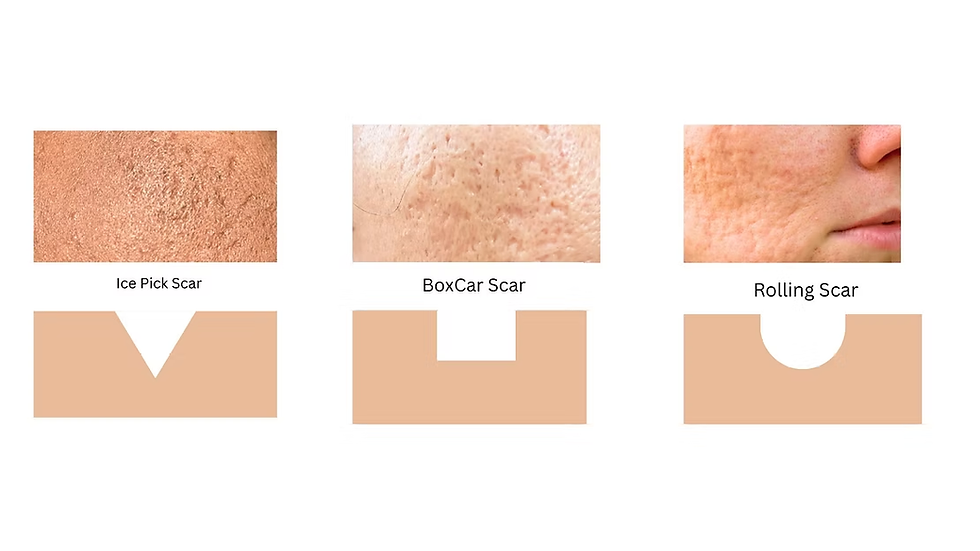
Usually CO2, often in combination. Pitted and depressed scars are structural, and structural problems need remodelling rather than pigment clearance.
Scar type matters: ice pick, boxcar and rolling scars respond differently, and rolling scars tethered by fibrous bands often need releasing before any resurfacing will help. Our guide to ice pick vs boxcar vs rolling acne scars explains how scar type drives treatment choice.
Post-Acne Marks (Flat, Not Pitted)
Often pico, and sometimes neither. Flat brown or red marks left after acne are not scars — they are pigmentation and vascular changes, and many fade on their own with sun protection. Treating them as scars leads to over-treatment.
Fine Lines and Skin Texture
CO2, as resurfacing. Pico may improve overall clarity but does not remodel texture.
Tattoo Removal
Pico. The shattering mechanism that fragments melanin also fragments tattoo ink.
Can You Have Both Pico and CO2 Laser?
Yes, and combination plans are common — because most patients present with more than one concern. Someone with both pigmentation and acne scarring genuinely needs two different mechanisms.
What matters is sequencing and spacing. The two treatments are not performed in the same session, and the skin needs to recover fully from a resurfacing treatment before a pigment laser is used over the same area. Running them too close together increases inflammation, raises the risk of post-inflammatory hyperpigmentation, and makes it impossible to tell which treatment produced which effect.
Your doctor should be able to explain why a particular order was chosen for your skin.
How a Doctor Chooses Between Them
In practice the decision comes down to a short set of questions:
Is the concern colour or contour? Colour points to pico. Contour points to CO2.
Can you feel it? Run a finger over the area. A mark you can see but not feel is pigment. A mark with depth or raised edge is textural.
What is your skin type? Darker and more reactive skin tolerates the lower thermal load of pico more comfortably, and requires more conservative CO2 settings.
How much downtime can you take? This changes timing, not the correct treatment. It is worth planning around rather than choosing a less suitable treatment to avoid.
Is there active inflammation? Active acne, eczema or infection in the area usually needs settling first.
If you cannot tell whether your concern is pigment or texture, that is a reasonable thing to have assessed rather than guessed at — and it is the single most common reason patients end up with the wrong treatment.
Understanding Treatment Costs
Under Singapore's Healthcare Services Act (HCSA) advertisement regulations, licensed medical clinics are not permitted to publish treatment pricing online. This applies to every licensed provider in Singapore.
What cost depends on:
Which laser is appropriate and how many sessions your concern realistically needs
The size of the area being treated
Whether a combination approach is required
The complexity of the concern
Your doctor discusses cost openly at consultation, once the plan is clear. Be cautious of any provider quoting a fixed price before anyone has examined your skin — the honest answer depends on what the assessment finds.
Proper Aftercare and Recovery
After Pico Laser
Recovery is usually short. Expect redness and mild warmth that settles within hours to a day. Treated pigment often darkens before it fades — this is expected and is a sign the treatment has worked, not a sign it has gone wrong. Sun protection is non-negotiable during clearance.
For a full timeline, see what happens day by day after pico laser.
After CO2 Laser
Recovery is more involved. Expect redness, swelling and oozing in the first days, followed by flaking and peeling as the skin repairs. Do not pick the flaking skin. Keep the area protected and moisturised exactly as instructed, and avoid sun exposure completely during healing.
For Both
Strict daily sunscreen, reapplied — UV exposure during recovery is the main driver of post-treatment pigmentation
Pause actives (retinoids, acids, vitamin C) until your doctor clears you
Do not combine with other facial treatments during the recovery window
Contact the clinic if you notice increasing pain, spreading redness, or signs of infection
Final Thoughts
Pico laser and CO2 laser are not competing options to choose between on price or popularity. They are different tools for different problems.
If your concern is colour — brown marks, sun damage, uneven tone, a tattoo — pico laser is almost certainly the relevant treatment. If your concern is contour — pitted scarring, texture, pores, crepey skin — CO2 is the one that addresses the cause.
Many patients need both, in the right order. Getting that order right is what the consultation is for.
FAQ
Which is better: pico laser or CO2 fractional laser?
Neither is better overall — they treat different problems. Pico laser targets pigment and is the appropriate choice for sun spots, freckles and uneven tone. CO2 fractional laser resurfaces the skin and is the appropriate choice for acne scarring, texture and pores. The better treatment is the one matched to your concern.
What is the difference between pico laser and fractional laser?
"Fractional" describes how a laser delivers energy — in a grid of microscopic treatment zones, leaving untreated skin in between to speed healing. It is a delivery pattern, not a specific machine. When people compare "pico vs fractional laser" they usually mean pico laser versus fractional CO2, which is the comparison covered throughout this guide.
Is fractional CO2 laser better than Q-switch?
They do different things. Q-switch is a pigment laser, like pico, though with longer nanosecond pulses. Fractional CO2 resurfaces texture. If the comparison you are weighing is for pigmentation, the relevant comparison is Q-switch versus pico rather than versus CO2.
Can you do pico laser after CO2 laser?
Yes, but not in the same session and not before the skin has fully recovered from resurfacing. The interval depends on how your skin healed and how aggressive the CO2 treatment was. Your doctor sets the spacing — treating inflamed or still-healing skin with a second laser raises the risk of pigmentation problems.
What is pico laser used for?
Pico laser is used for pigmentation — sun spots, age spots, freckles, some presentations of melasma — as well as overall skin tone and clarity, and tattoo removal. It is not a resurfacing treatment and does not address pitted scarring or significant texture concerns.
What are the disadvantages of pico laser?
It does not treat textural concerns, so it is the wrong treatment for pitted acne scars or skin laxity. It usually requires a course rather than a single session. Pigment commonly darkens before it clears, which some patients find unexpected. And as with any laser, results depend on the type of pigmentation being treated — some respond considerably better than others.
Is the pico laser painful?
Most patients describe it as tolerable — commonly compared to a rubber band flick or light prickling. Numbing cream is applied beforehand where appropriate. It is considerably more comfortable than ablative resurfacing.
What is fractional CO2 laser good for?
Acne scarring, surgical and traumatic scars, enlarged pores, fine lines and overall skin texture. It is a resurfacing treatment, so it addresses structural concerns rather than surface discolouration.
How long do CO2 fractional laser results last?
CO2 works by stimulating collagen remodelling, and that new collagen is your own tissue, so the structural improvement is long-lasting. What it does not do is stop future ageing — skin continues to change over time, and sun protection substantially affects how long results hold.
How much do laser treatments cost in Singapore?
Singapore's HCSA advertisement regulations do not permit licensed clinics to publish treatment pricing online. Cost depends on which laser is appropriate, the number of sessions needed, and the area treated. Your doctor discusses this openly at consultation.
Which laser is safer for darker skin tones?
Pico laser generally carries lower risk for darker skin because it delivers less heat into surrounding tissue, and heat is what drives post-inflammatory hyperpigmentation. CO2 can be used on darker skin but requires more conservative settings and careful aftercare. Skin type assessment should happen before any laser treatment, not after.
Who performs laser treatments at your clinic?
All laser treatments are performed by our MOH-certified doctors at our Orchard and Hougang clinics. Pico laser and CO2 scar resurfacing laser are both available at each location.
Book a Laser Consultation
The most useful thing you can do before committing to either treatment is to have someone establish whether your concern is pigment or texture. That single question determines which laser is appropriate, and it is not always obvious from the mirror.
Book a consultation at our Orchard or Hougang clinic and our doctors will assess your skin and explain which approach suits it.
Read more:

